1. Name
- Scientific Name: Stegosaurus stenops
- Common Name: Stegosaurus
2. Period of Existence
- Geological Period: Late Jurassic (about 155 to 150 million years ago)
3. Classification
- Order: Ornithischia
- Suborder: Thyreophora
- Family: Stegosauridae
- Genus: Stegosaurus
- Species: stenops (most well-known species, but others include Stegosaurus armatus)
4. Size
- Length: Approximately 9 meters (30 feet)
- Weight: Around 5 tons (10,000 pounds)
5. Diet
- Herbivorous: Stegosaurus fed on low-lying plants, including ferns, cycads, and other prehistoric vegetation. Its tooth structure suggests it was better suited for browsing soft plants rather than chewing tough vegetation.
6. Majestic Traits
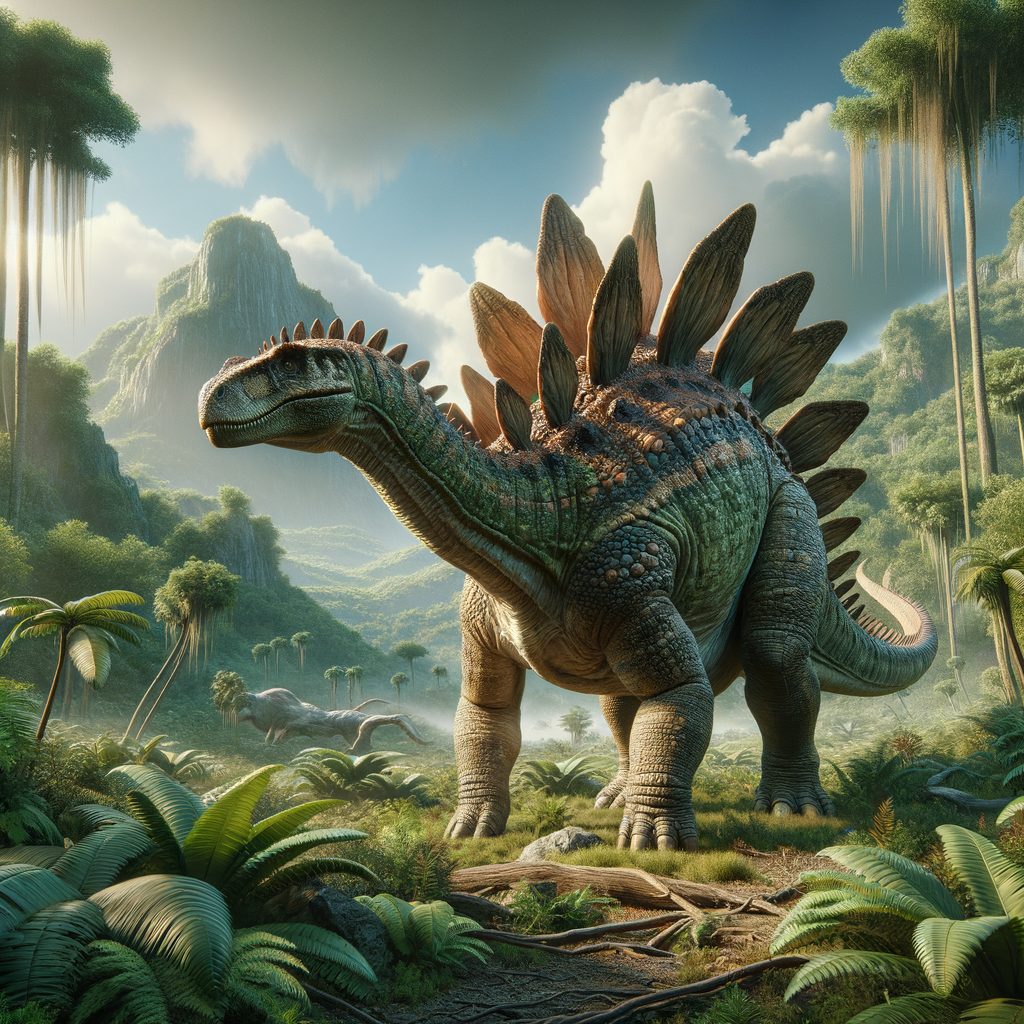
- Iconic Plates: The most distinctive feature of Stegosaurus was the two rows of large, bony plates (osteoderms) that ran down its back. These plates, which were flat and varied in size, may have served multiple functions: as a display feature to intimidate predators or attract mates, and potentially as a thermoregulatory mechanism to help control body temperature by absorbing or dissipating heat.
- Thagomizer: The tail of Stegosaurus was equipped with four long, sharp spikes known as the “thagomizer.” This spiked tail was likely used as a defensive weapon against predators like Allosaurus. Fossil evidence shows damage to bones that suggests these spikes could have been effectively used in combat.
- Small Brain: Despite its large size, Stegosaurus had a surprisingly small brain, roughly the size of a walnut, leading to much speculation about its intelligence. However, Stegosaurus didn’t need high intelligence to survive, as its size, armor, and tail spikes were more than enough to deter most predators.
- Posture and Movement: Stegosaurus walked on all four legs (quadrupedal) and had short forelimbs compared to its longer hindlimbs. This gave it a sloping posture, with its head held low to the ground, which was ideal for browsing plants close to the surface. Its movements were likely slow and deliberate, but its tail was flexible and could have swung quickly in defense.
- Social Behavior: There is still debate about whether Stegosaurus lived in herds or was solitary. However, some evidence suggests that it may have exhibited some form of social behavior, possibly for protection against predators.
- Gentle Herbivore: Despite its intimidating appearance with spiked tails and large plates, Stegosaurus was a gentle herbivore. Its body design was well-suited for defense but not for active predation or aggression. Its peaceful nature made it one of the most iconic and beloved dinosaurs.
Summary:
Stegosaurus is instantly recognizable by the two rows of large, bony plates running along its back and the four sharp spikes at the end of its tail. These plates may have served as a display to intimidate predators or regulate body temperature, while its tail spikes, known as the “thagomizer,” were likely used for defense. Despite its large size and armored body, Stegosaurus had a relatively small brain, often sparking debates about its intelligence. A gentle giant of the Jurassic era, Stegosaurus is an iconic symbol of prehistoric life.