
1. Name
- Scientific Name: Spinosaurus aegyptiacus
- Common Name: Spinosaurus
2. Period of Existence
- Geological Period: Late Cretaceous (approximately 99 to 93 million years ago)
3. Classification
- Order: Saurischia
- Suborder: Theropoda
- Family: Spinosauridae
- Genus: Spinosaurus
- Species: aegyptiacus
4. Size
- Length: Up to 15 meters (49 feet)
- Weight: Approximately 7 to 10 tons (14,000 to 20,000 pounds)
5. Diet
- Carnivorous: Spinosaurus primarily fed on fish, making it one of the few large theropods with a semi-aquatic lifestyle. It likely hunted large prehistoric fish and other aquatic creatures but may have also scavenged or preyed on smaller dinosaurs.
6. Majestic Traits
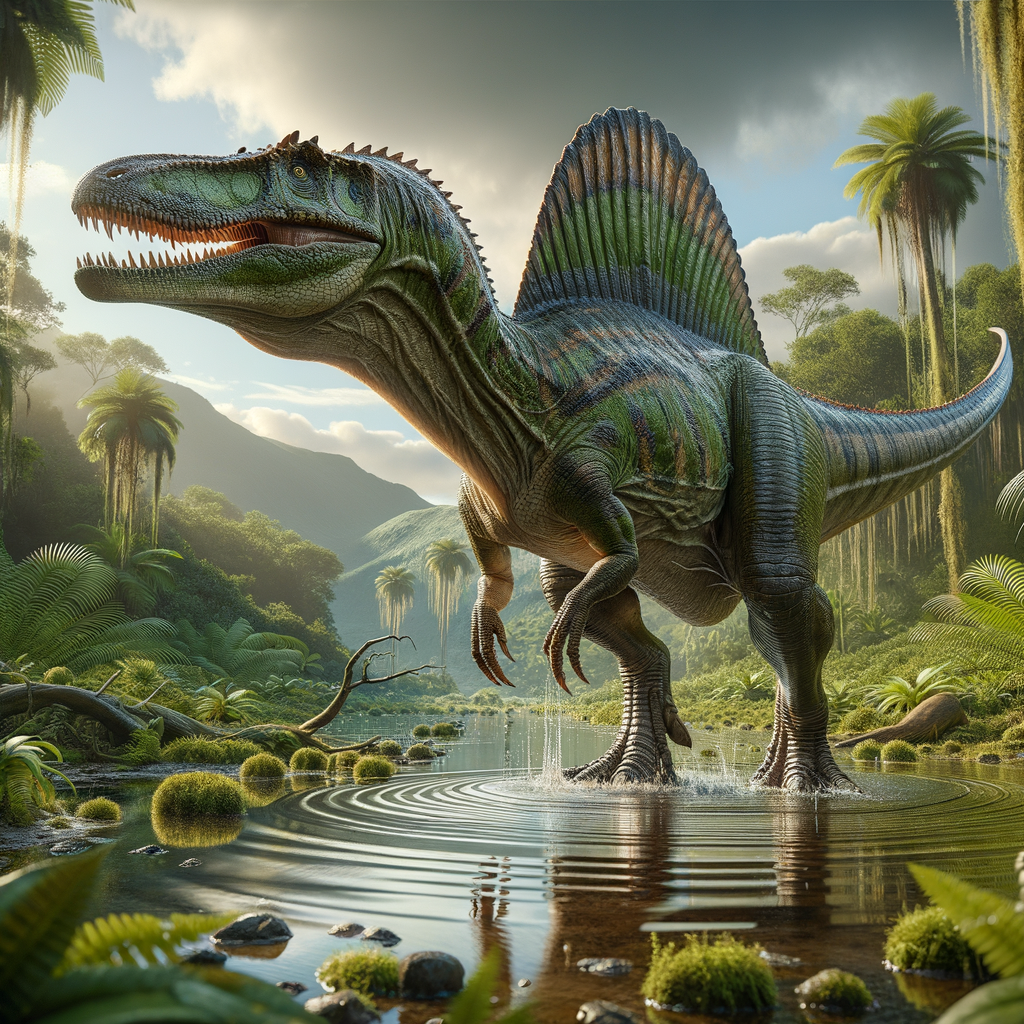
- Sail-like Structure: The most distinctive feature of Spinosaurus was the large sail on its back, formed by elongated neural spines that extended from its vertebrae. This sail could have been used for a variety of purposes, including thermoregulation, display for attracting mates, or intimidating rivals. The exact function remains a topic of scientific debate, but its appearance made Spinosaurus instantly recognizable.
- Semi-aquatic Lifestyle: Unlike most other large theropods, Spinosaurus was adapted for a semi-aquatic environment, making it a unique predator. Fossil evidence suggests that it spent much of its time near rivers, lakes, and coastal areas, hunting fish in the water. Its long, narrow, crocodile-like snout was filled with conical teeth that were perfect for gripping slippery prey like fish. It had a combination of land and water adaptations, such as a strong, flexible tail for swimming.
- Crocodile-like Snout: Spinosaurus had a long, narrow snout that resembled that of a modern crocodile. This snout, along with its conical teeth, was ideally suited for hunting in aquatic environments, allowing it to snatch fish from the water with precision. The teeth were not serrated like other theropods, indicating a diet specialized for gripping rather than tearing flesh.
- Aquatic Adaptations: Besides its crocodile-like snout, Spinosaurus had other features that hinted at its semi-aquatic nature. It had a longer, more flexible tail than most theropods, which likely helped propel it through the water. Its short hind legs and flat feet suggest it may have been an excellent swimmer, spending a significant amount of time hunting in water.
- Size and Power: Spinosaurus was one of the largest carnivorous dinosaurs ever discovered, surpassing even Tyrannosaurus Rex in length. Its massive size and power made it one of the top predators of the Cretaceous period. While it was less suited for land-based combat than other theropods, its size alone would have made it a formidable force in any environment.
- Adaptability: While Spinosaurus was primarily an aquatic hunter, it likely had the versatility to hunt or scavenge on land as well. Its semi-aquatic nature allowed it to exploit a wide range of prey, giving it a distinct advantage over other theropods that were confined to land-based hunting.
- Discovery and Reconstruction: Spinosaurus was first discovered in Egypt in 1912, but much of the original fossil material was destroyed during World War II. Later discoveries and advanced research have provided a clearer picture of its unique adaptations. Spinosaurus remains one of the most controversial and studied dinosaurs due to its unusual features, leading to frequent revisions of its appearance and lifestyle.
Summary:
Spinosaurus was a true giant of the Cretaceous period, instantly recognizable by the enormous sail-like structure on its back. This sail, formed by elongated spines, may have been used for temperature regulation or display. Spinosaurus is unique among large theropods for its semi-aquatic lifestyle, adapted to both land and water. With its long, crocodile-like snout filled with conical teeth, it was perfectly suited for catching fish, making it a top predator in its environment. Its size, specialized hunting techniques, and aquatic adaptations make Spinosaurus one of the most fascinating and fearsome dinosaurs ever discovered.