
1. Name
- Scientific Name: Pteranodon longiceps
- Common Name: Pteranodon
2. Period of Existence
- Geological Period: Late Cretaceous (about 100 to 66 million years ago)
3. Classification
- Order: Pterosauria
- Suborder: Pterodactyloidea
- Family: Pteranodontidae
- Genus: Pteranodon
- Species: longiceps
4. Size
- Wingspan: Ranged between 7 and 10 meters (23 to 33 feet)
- Weight: Approximately 25 to 40 kilograms (55 to 88 pounds) due to its lightweight, hollow bone structure, which was ideal for flight.
5. Diet
- Piscivorous: Pteranodon primarily fed on fish. It likely skimmed over the surface of oceans and rivers, using its long beak to snatch fish from the water, or dove into the water to catch its prey.
6. Majestic Traits
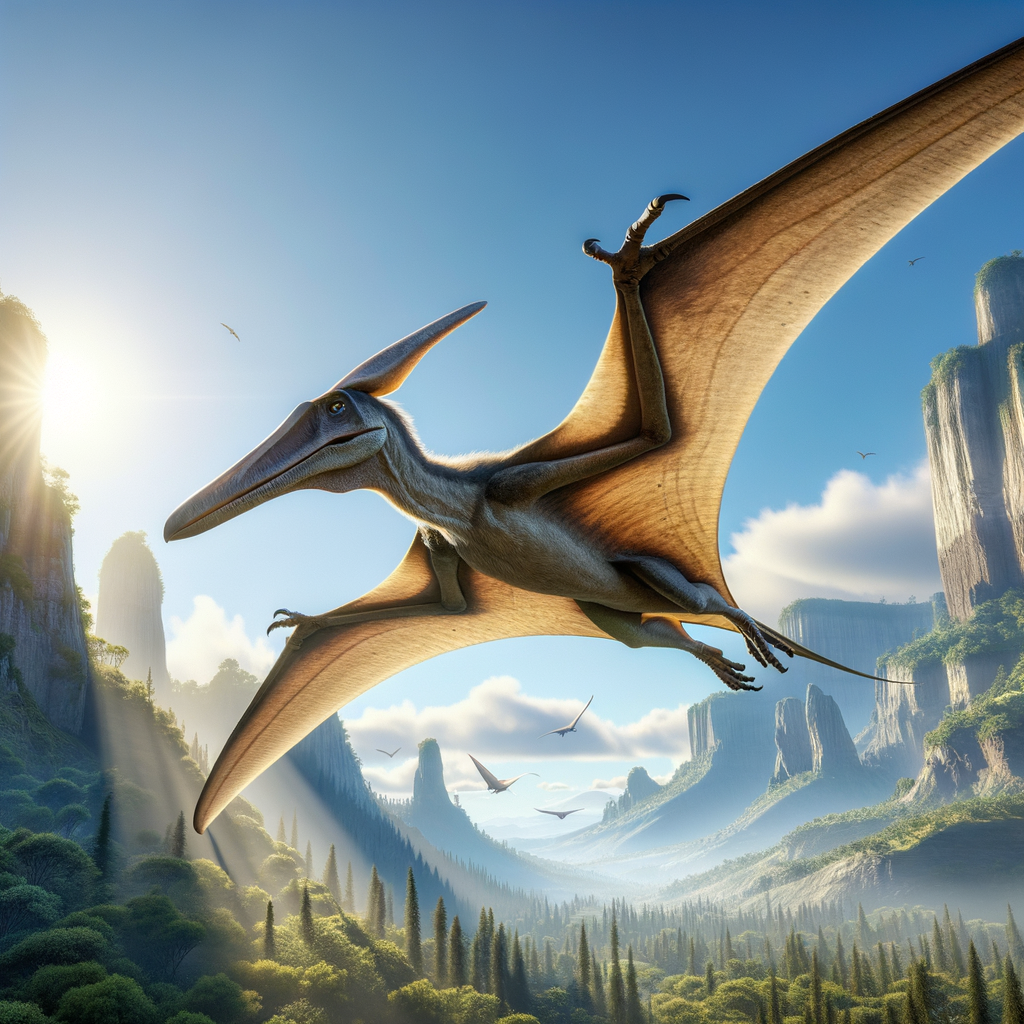
- Impressive Wingspan: Pteranodon was one of the largest known flying reptiles, with a wingspan reaching up to 10 meters. Its wings were formed by a membrane of skin, muscle, and other tissues stretching from its elongated fourth finger to its body, allowing it to soar long distances with minimal energy.
- Toothless Beak: Unlike some earlier pterosaurs, Pteranodon had a long, toothless beak perfectly suited for catching fish. The beak may have also been used to help it balance during flight, and its specialized structure made it efficient at aerial hunting.
- Crested Head: One of the most distinguishing features of Pteranodon was the large bony crest on the back of its head. While the crest’s exact function remains debated, it likely helped with aerodynamics, allowing Pteranodon to steer and stabilize itself while in flight. The size and shape of the crest varied between males and females, possibly playing a role in sexual selection or species identification.
- Master of Flight: Pteranodon’s light body and hollow bones, combined with its large wings, made it an extraordinary glider. It was not built for flapping flight like modern birds but instead likely soared for long periods, using ocean updrafts and thermals to remain airborne with little effort.
- Aquatic Hunter: Fossil evidence found near ancient coastal environments suggests that Pteranodon lived near large bodies of water, where it fed on fish. It may have used its long, pointed beak to snatch fish from the water while flying, or it could have dove down to catch prey, similar to modern seabirds like pelicans.
- Not a Dinosaur: Though often mistakenly referred to as a dinosaur, Pteranodon was a pterosaur, a separate group of flying reptiles. Pterosaurs were the first vertebrates to evolve powered flight, and Pteranodon represents one of the most advanced and successful forms of these prehistoric fliers.
Summary:
Pteranodon was one of the largest flying reptiles of the Cretaceous skies. With its impressive wingspan and specialized beak, it soared above oceans and rivers, diving skillfully to catch fish. Its toothless beak and aerodynamic frame made it a master of aerial hunting, a true marvel of prehistoric flight. Despite often being mistaken for a dinosaur, Pteranodon was part of the pterosaur lineage, showcasing nature’s early experiments with flight.