1. Name
- Scientific Name: Velociraptor mongoliensis
- Common Name: Velociraptor
2. Period of Existence
- Geological Period: Late Cretaceous (about 75 to 71 million years ago)
3. Classification
- Order: Saurischia
- Suborder: Theropoda
- Family: Dromaeosauridae
- Genus: Velociraptor
- Species: mongoliensis
4. Size
- Length: Approximately 2 meters (6.5 feet)
- Weight: Around 15 kilograms (33 pounds)
5. Diet
- Carnivorous: Velociraptor was a meat-eater, preying on small to medium-sized animals, including mammals, reptiles, and other dinosaurs. Its agility and sharp claws made it an effective hunter, capable of taking down prey quickly and efficiently.
6. Majestic Traits
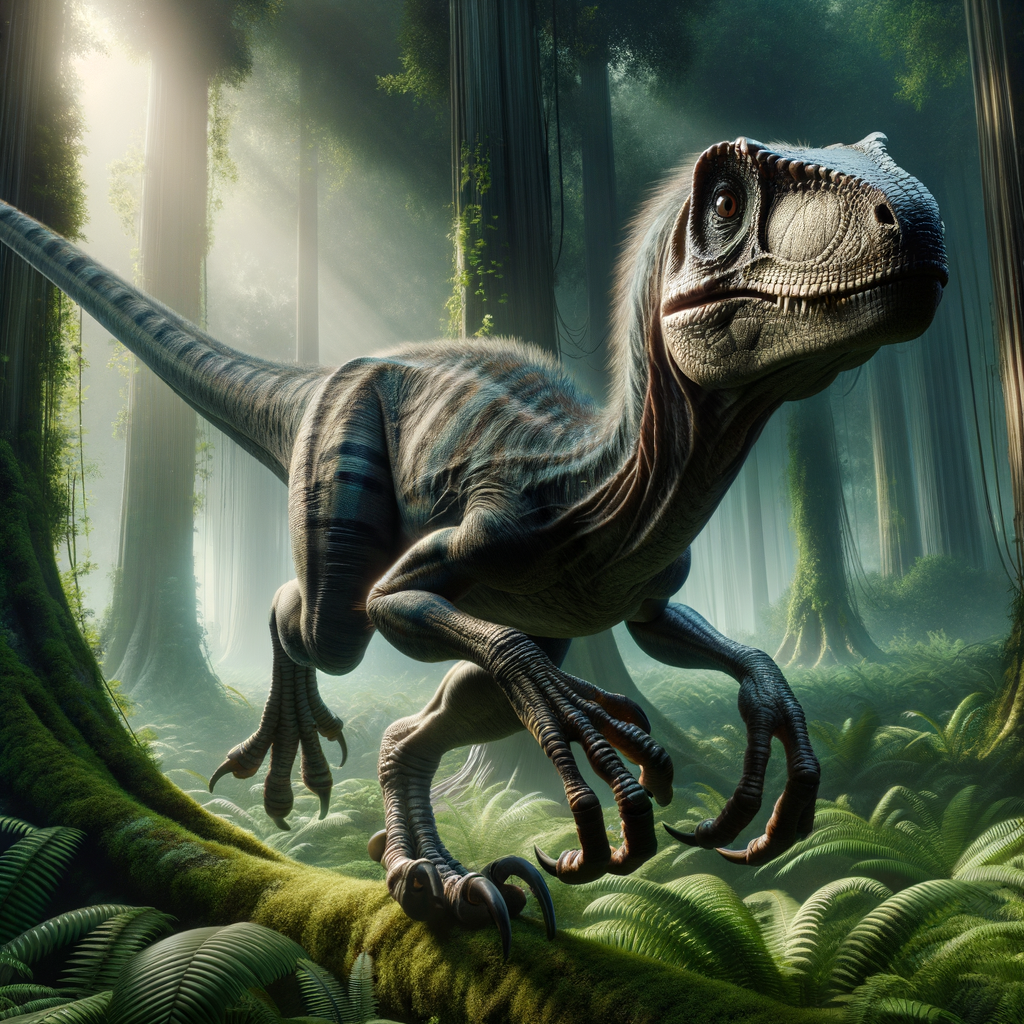
- Sickle-shaped Claws: The most iconic feature of Velociraptor was the large, retractable sickle-shaped claw on each of its feet. These claws, measuring around 6.5 cm (2.5 inches), were likely used to deliver fatal slashing blows to its prey. By leaping onto its victims and using these claws to cut vital areas, Velociraptor was able to take down animals much larger than itself.
- Feathers: Fossil evidence suggests that Velociraptor was feathered, giving it a bird-like appearance. While it couldn’t fly, the presence of feathers indicates that Velociraptor may have been an evolutionary link between non-avian dinosaurs and modern birds. Its feathers likely played a role in temperature regulation, display, or balance during hunting.
- Intelligence and Agility: Velociraptor was not only fast but also highly intelligent for its time. Its relatively large brain size for its body mass suggests complex hunting strategies, possibly including pack behavior. This intelligence, combined with its speed, allowed Velociraptor to outmaneuver and outthink its prey, making it one of the most efficient predators of the Cretaceous period.
- Pack-hunting: While there is some debate over whether Velociraptor hunted in packs, it is often depicted as a social predator that coordinated with others to bring down larger prey. This theory is supported by evidence of other dromaeosaurids hunting in groups, suggesting that Velociraptor may have had similar behavior.
- Speed and Agility: Velociraptor was built for speed, with its long, slender legs allowing it to run at high speeds. It could also jump and leap with remarkable agility, enabling it to chase down or ambush prey. Its lightweight body was a key factor in its agility, allowing it to move quickly over rugged terrain.
- Sharp Teeth and Strong Jaws: In addition to its deadly claws, Velociraptor had a mouth full of sharp, serrated teeth designed to tear through flesh. Though relatively small, its bite was powerful enough to cause significant damage to its prey.
- Bird-like Features: Besides feathers, Velociraptor had other avian characteristics, such as a long, stiffened tail that helped it maintain balance while running or making sharp turns. This bird-like agility, along with its other advanced features, adds to its reputation as a highly evolved predator.
Summary:
Velociraptor was a small but incredibly agile predator, renowned for its speed and intelligence. Its sharp claws, especially the sickle-shaped claw on each foot, were its primary weapons, used to take down prey with precision. Despite its modest size, Velociraptor’s pack-hunting behavior and cunning tactics made it a formidable predator. Recent discoveries suggest it may have had feathers, giving it a bird-like appearance and shedding new light on its evolutionary link to modern birds. Quick, deadly, and smart, Velociraptor remains one of the most iconic dinosaurs, often portrayed in popular culture as a symbol of prehistoric cunning.